Author: Steve Larrivee

For electronic system designers attempting to quantify a budget for their flash storage requirements, looking at total cost of ownership for the life of the program provides a needed sanity check. A really low price for a flash card generally signifies there is a limited amount of emphasis put into areas which increase the longevity...
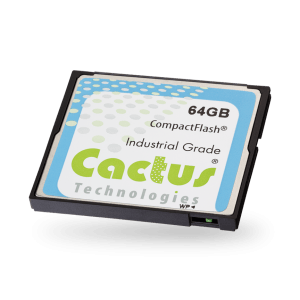
An optional Physical Write Protect Switch feature of the Cactus Industrial Grade Compact Flash and CFast Cards offers OEM designers the opportunity to prevent writes to the solid state storage prior to their systems leaving the factory or after sensitive data has been stored. There are many uses for this feature. In some Gaming Applications, once code...

Cactus Technologies welcomes you to visit our booth at the upcoming EELive! Conference and Expo 2014. The exhibition is being held from April 1 - 3, 2014 at the McEnery Convention Center in San Jose, CA. In addition to over 200 exhibitors displaying state-of-the-art technology in all facets of embedded technologies, the EE Live! Conference...

There are any number of reasons to consider a change of your Industrial Solid State Flash Storage Supplier. Varying from product discontinuation, to quality, reliability or delivery related issues or perhaps a change in ownership, management or support personnel. Whatever the reason for the change, there are a number of items that should be considered and analyzed...

Over the past several years, the storage interface for embedded flash storage applications has seen a migration from the IDE/ATA interface to lower pin count and in many cases faster SD/MMC and SATA interface devices. To address the physical size, ruggedness and performance requirements of diverse applications, several form factors have emerged in both the...
RoHS, short Reduction of Hazardous Substances, is a directive initially adopted by the European Union in February 2003. Its purpose is the restriction of the use of certain hazardous substances in electrical and electronic equipment. Directive 2002/95/EC was the first version of the RoHS regulations and was replaced by Directive 2011/65/EU in July 2011. While...
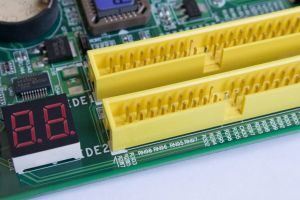
PC Motherboards and Single Board Computers (SBC) have several available options to attach a flash storage device. For a system with an IDE (Integrated Drive Electronics) connector, a very simple solution is an IDE Disk-On-Module (DOM). The IDE interface was originally designed for rotating HDD (Hard Disk Drives) in the PC system. The 3.5” or...

The Conflict Minerals are tantalum, tin, tungsten and gold (collectively known as the 3TGs). In the US, the 2010 Dodd-Frank Act created legislation in an effort to eliminate Conflict Minerals which originate in the Democratic Republic of Congo (DRC) and surrounding countries. The concern is 3TGs mined and transported within this region directly or indirectly...

There are four main families of SD Card products with three related to memory devices. The SD interface has become the go to interface for most consumer devices and it's making some inroads to the industrial flash storage market as well. SD refers to the original Standard Capacity SD Card. SDHC refers to SD High...

Cactus Technologies welcomes you to visit our booth at embedded world Exhibition & Conference 2014. The exhibition is being held next week, from February 25 – 27, 2014 at the Exhibition Centre Nuremberg in Nürnberg, Germany. Around 900 exhibitors are presenting state-of-the-art technology in all facets of embedded technologies, from construction elements, modules and complete...