
Author: Steve Larrivee
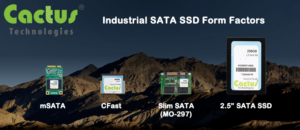
Industrial embedded system designs require a reliable storage device to store the operating system, application and data which can be called on to operate for a decade or more in harsh environments. This post focuses on the SATA interface devices for the Industrial environment. For a more comprehensive view, of the specifics of Industrial Grade...

This is Blog #1 of 13 in our Solid State Drives 101 educational series. If you're ready, continue to Blog #2: SLC, MLC & TLC NAND Flash. This article takes a look at the basics of a NAND flash cell, the building block of almost every solid state drive. It is the first of several articles that...

What happens to data in-transit to the solid state drive (SSD) when there is an unexpected power interruption, is an item overlooked by many Industrial OEM host system designers. Limiting the systems exposure to data loss should be high on the list of design priorities. The issue of unexpected power loss presents itself when the...

This Infographic illustrates several key characteristics of Industrial Grade Flash Storage, showing its advantages over MLC and TLC NAND based devices.
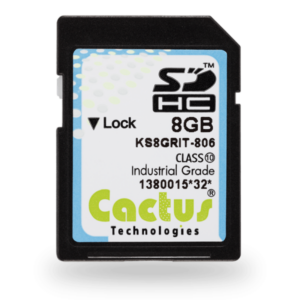
The simplified design requirements of a serial interface have made SD Cards an ideal solution for OEMs in consumer and industrial markets. This post is a brief primer on the SD Card interface itself. The official SD Card specification is controlled by the SD Card Association (www.sdcard.org) and is available only to SD Association members. If you...

Self-Monitoring, Analysis and Reporting Technology (aka S.M.A.R.T.) is a feature on many Hard Disk Drives and Solid State Drives (SSD) to monitor the health of the drive with the purpose to forewarn of any failure. The idea behind SMART is to anticipate a future failure by using statistics and reliability data reported back from the...
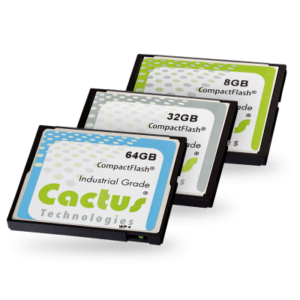
Industrial CompactFlash have been used for almost two decades in applications requiring a highly reliable data storage device. Originally offered in a maximum capacity of 4Mbytes, CF Industrial are now available in capacities of 64Gbytes. CompactFlash cards were originally designed in 1995 to provide a smaller form factor flash storage device for use in consumer and...

Source: DRAMeXchange I just saw the most recent NAND Supplier market share numbers and thought it would be interesting for others. A key point is the market share for SanDisk is now appearing by itself as of Q4 2013. Previously this was either reported as part of Toshiba’s percentage or not reported. Total NAND Revenue...

Military and Government applications using solid state drives (SSD) in many cases require additional features than the typical commercial or even industrial SSD have to offer. These features includes security of data, write protection, quick erasure and high shock, vibration and environmental ratings. This market need prompted Cactus to develop Military versions of our high...

SATA Interface flash storage devices continue to eat away at the IDE/PATA interface in the embedded system marketplace.This post focuses on the speed and performance of one particular embedded SATA module - the mSATA form factor.mSATA drive have 50.8mm x 29.85mm length and width providing a limited amount of space for components. Typically a controller, possibly some variety of...